Here you will find several examples of standard job application forms in PDF format, printable and valid for applying for a job. You can print the forms and fill them out by hand using a pen or edit them on your computer using a free PDF reader such as Adobe Acrobat Reader.
What does a basic job application form look like?
There is no single official job application, but most forms share the same sections and ask every candidate the same questions, without asking about sex, age, race, national origin or religion:
- Personal information
- Position you are applying for
- Education
- Skills and qualifications
- Employment history
- Military service (optional)
- References
- Disclaimer and signature
Printable job application forms in PDF
I have added several PDF and Word templates so that you can have the job application form best tailored to your situation ready for printing. Take a look at the description of each of them and use the one that best suits your needs:
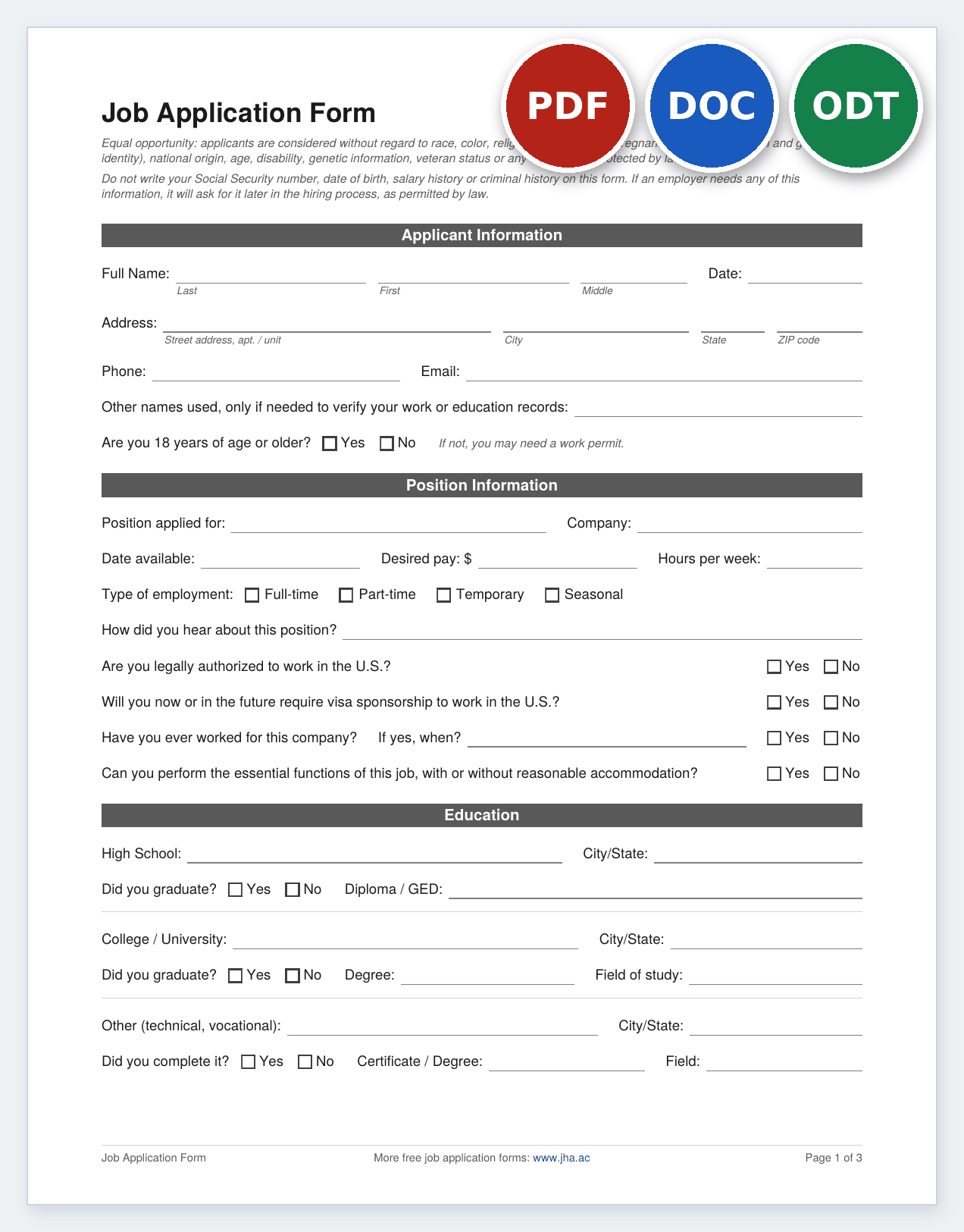
Standard US job application form sample
This is a standard US job application form. Download it for free, fill it out with your details and use it to apply for a job. The PDF is fillable, so you can complete it on your computer and print it, or print it blank and fill it out by hand.
Updated in November 2026, it does not ask for your Social Security number, date of birth, salary history or criminal record, questions that many U.S. states and cities restrict on job applications.
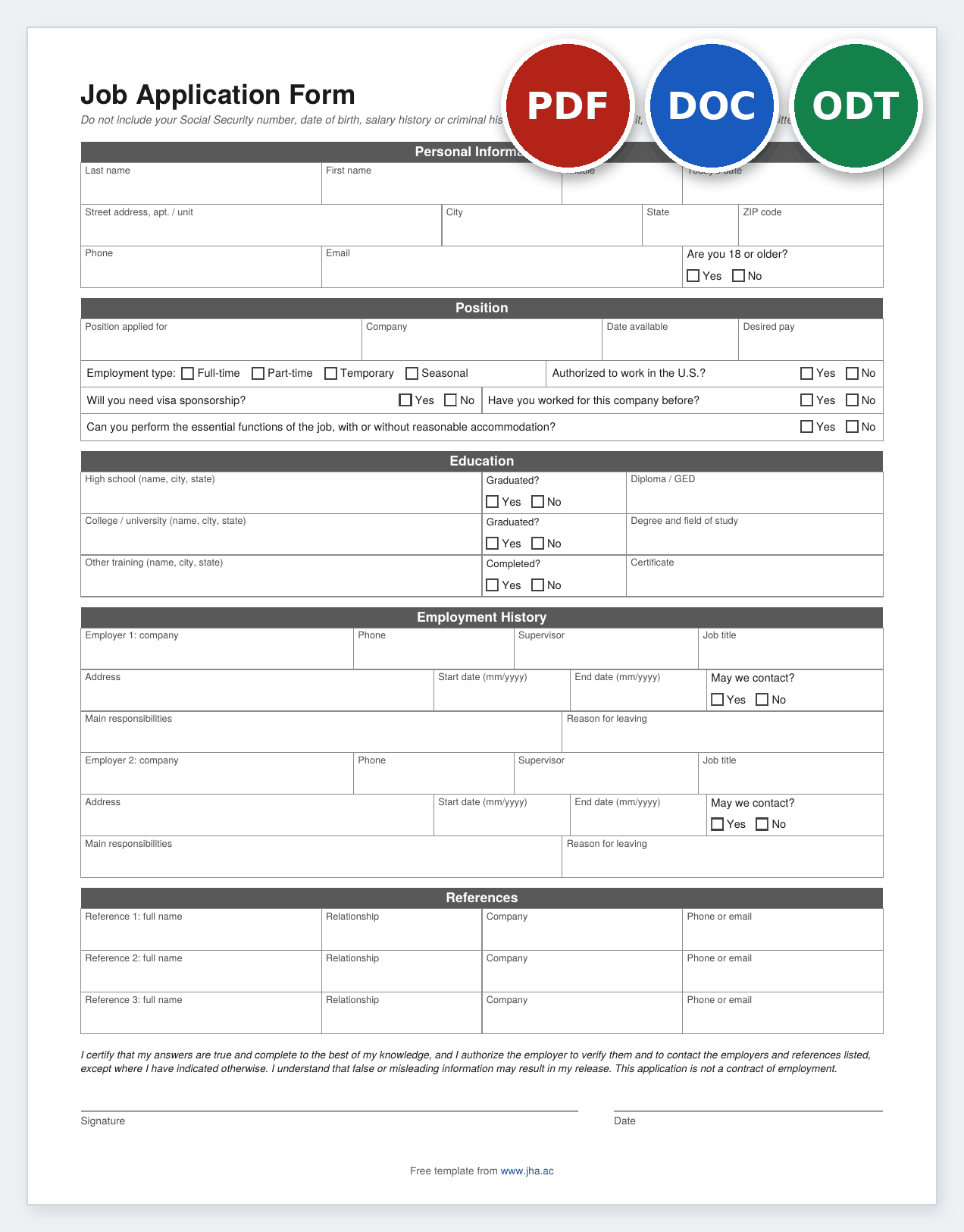
One-page job application form
If you need something quicker, this short version fits on a single sheet. It keeps the essentials (personal information, the position, education, two previous jobs and three references) and, like the full form, leaves out the questions that many states restrict. It’s ideal for walk-in applications at stores, restaurants or warehouses.
Generic job application form for Alaska
This application model is proposed by the Alaska Department of Labor and Workforce Development itself.

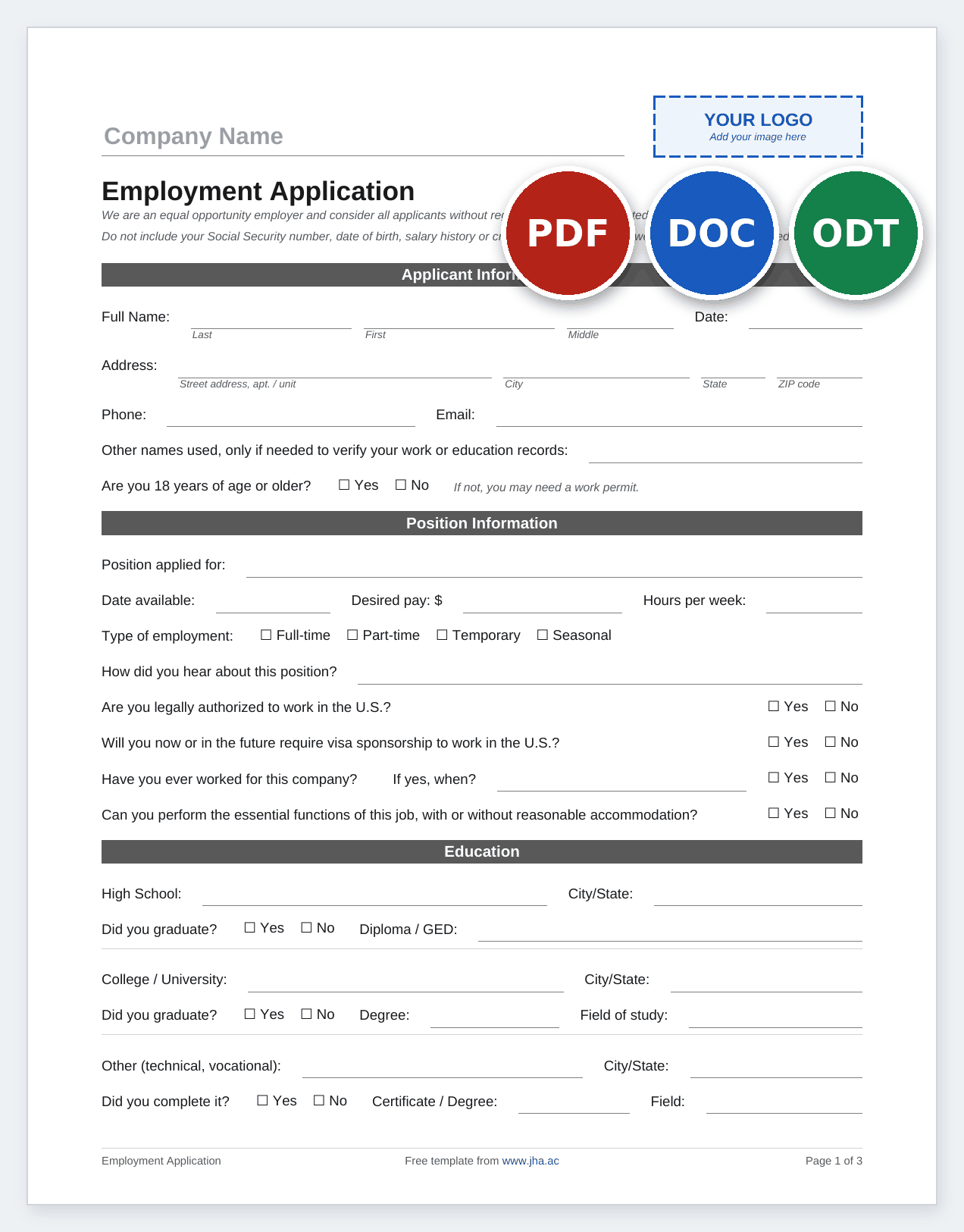
Standard application for employment (For employers)
Any company looking to hire new employees may use this form to collect information on job applicants. The template can be edited to add in the company name and logo.
How to fill out a basic job application template
A job application form is a standardized document for every candidate to be able to apply under the same conditions, but it is still similar to a resume, where in addition to entering certain basic information, one must also add any diplomas and professional experience that is most related to the job that one is applying to.
- Our forms can be printed and filled out by hand
- You can download the template and fill it out on your computer using Adobe Acrobat Reader
- There are companies that give you the option to fill out their application form online on their employment website
Applicant information
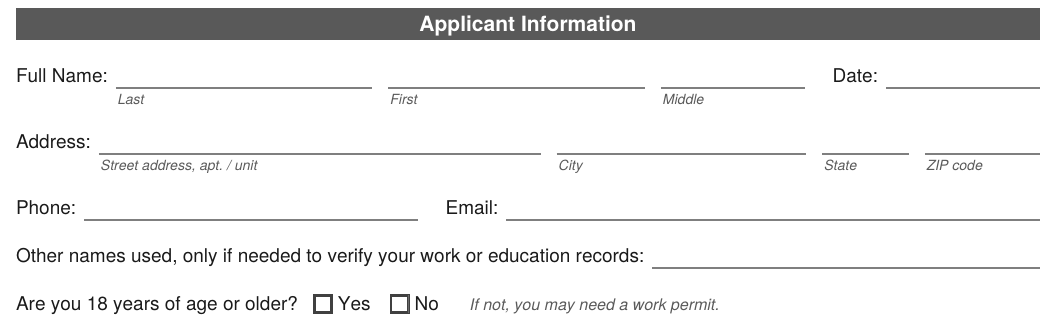
Write your full name, address, phone number and email. The form also asks whether you are 18 or older and, only if the employer needs them to verify your records, any other names you have used, such as a previous last name.
A well-designed application does not ask for your Social Security number, date of birth or marital status. If the employer needs your Social Security number, for example for payroll or a background check, it will usually ask for it after offering you the job.
Position information
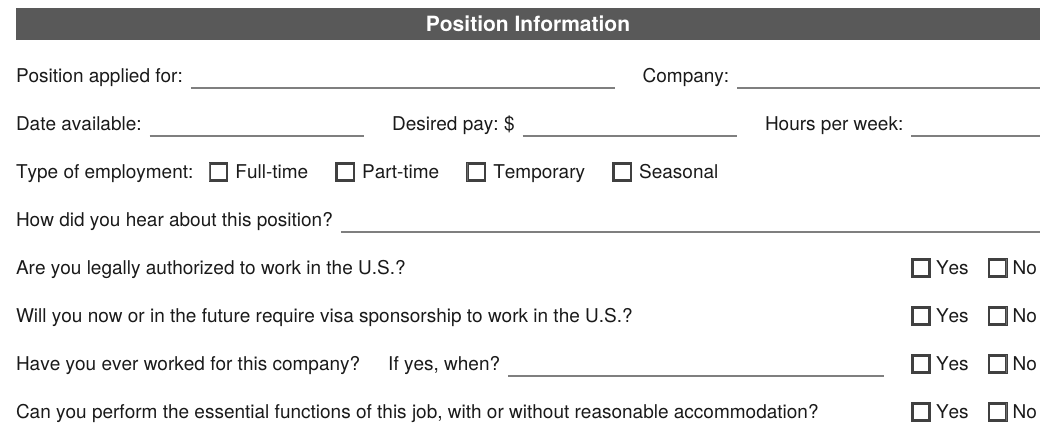
Indicate the position and company you are applying to, when you can start, how many hours a week you are available and your desired pay. If you are not sure about the pay, you can write a range or “negotiable”.
Employers may ask whether you are legally authorized to work in the U.S. and whether you will need visa sponsorship. Both questions are allowed. In general, they should not ask whether you are a U.S. citizen or limit the job to citizens, unless a law or a government contract requires it.
The question about performing the essential functions of the job, with or without reasonable accommodation, only needs a yes or no. You don’t have to give any information about your health or a disability.
Education
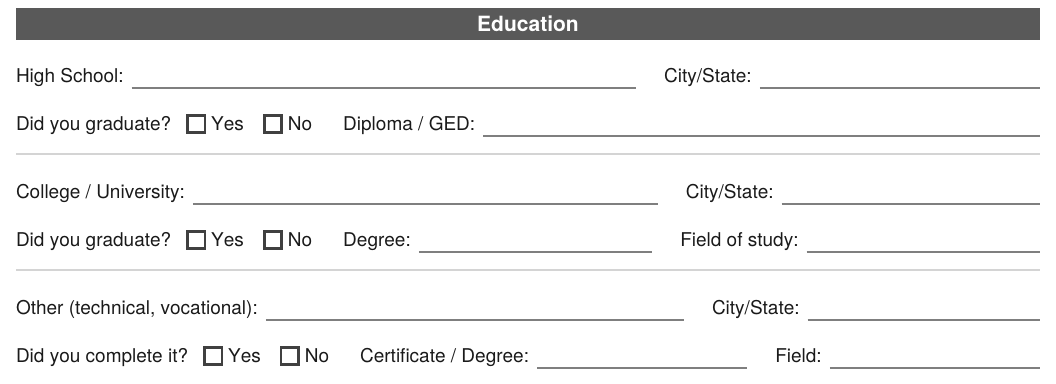
List your high school, college and any technical or vocational training, along with the diploma, degree or certificate you obtained and your field of study. If you are still studying, write “in progress” next to the degree.
The form asks whether you graduated, but not when. Dates of attendance and graduation reveal your age, so Colorado, Connecticut, Delaware and Oregon do not allow employers to ask for them at the start of the hiring process.
Skills and qualifications

Add the licenses and certifications that are relevant to the job, and skills such as software, equipment you can operate or languages you speak. Focus on what the job ad asks for.
Employment history
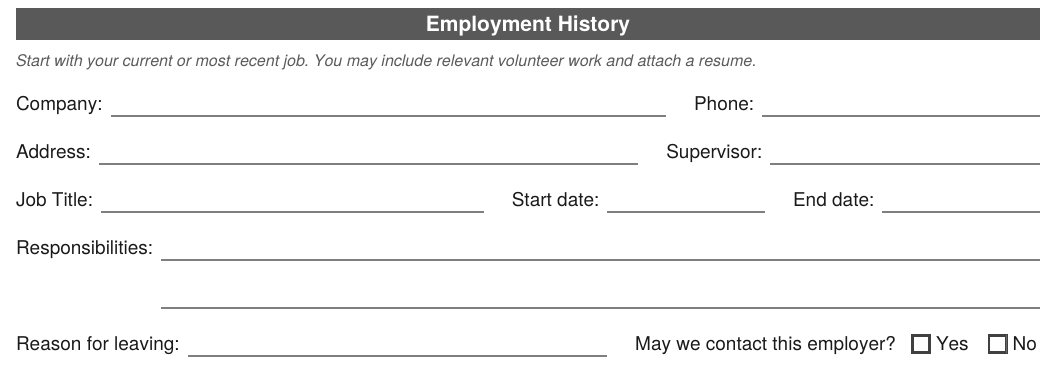
Start with your current or most recent job and work backwards. You should avoid including jobs from more than 10 years ago. For each job, give the company, your supervisor, your job title, the start and end dates (month and year), your main responsibilities and the reason you left.
This information shows the recruiter the practical skills and experience you have gained. If you would rather your current employer not be contacted yet, check “No” in “May we contact this employer?”.
You don’t need to include your previous salary: 18 states and Washington, D.C., including California, New York and Illinois, prohibit employers from asking about salary history.
Military service (optional)

If you have served in the U.S. Armed Forces, check “Yes”, indicate the branch and describe any training or experience that is relevant to the job, such as leadership, logistics or technical skills. You don’t need to state your rank or type of discharge.
References
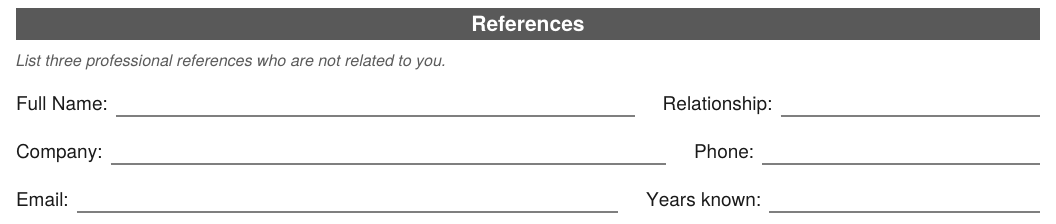
This is an important part of any job application, because it gives your future boss the confidence of being able to contact your previous supervisors and ask how you performed at their company.
- I have references: enter the full name, relationship, company, phone and email of each person. Prioritize professional contacts who are not related to you.
- I have no references: there is always someone who can speak about you and your skills. If this will be your first job, you can name a teacher or professor, or the supervisor of an internship.
If you did not have a good relationship with your boss, you can give the contact information of the Human Resources department, which will offer a more unbiased view of your time at the company. What you should never do is give false references or offer to give references about someone in exchange for them doing the same for you.
Additional information
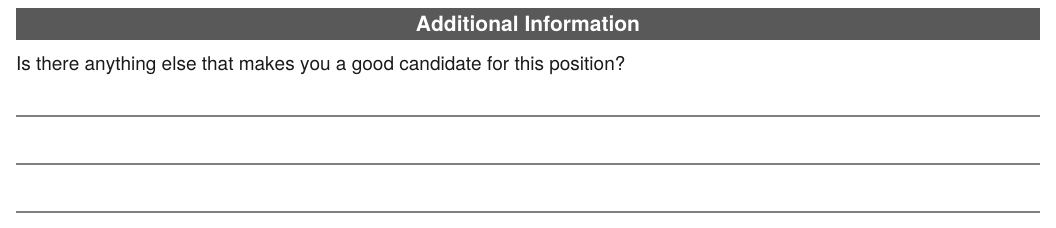
Use this space to explain anything else that makes you a good candidate: an achievement, your availability for evenings or weekends, your willingness to relocate or a short explanation of a gap in your employment.
Disclaimer and signature
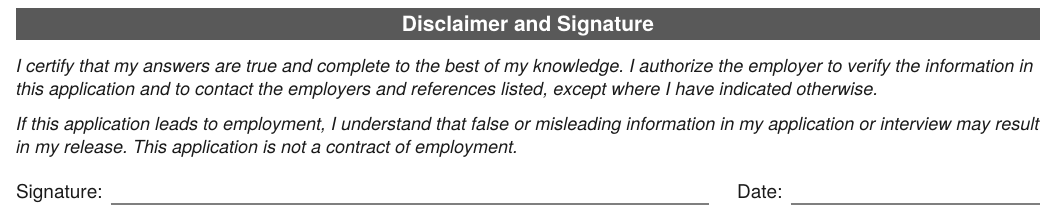
At the end of the form you sign and date the application, certifying that the information is accurate and allowing the employer to verify it and contact the employers and references you listed.
Questions an employer should not ask on a job application
Federal law and many state and city laws limit what an employer can ask before making a job offer. If an application asks for any of the following, you can politely ask why it is needed:
- Social Security number: it is normally needed only after you are hired, for payroll. Maine prohibits asking for it on the application.
- Criminal record: 15 states, including California, Illinois, New Jersey and Washington, plus cities such as New York and Philadelphia, don’t allow private employers to ask on the initial application.
- Salary history: prohibited in 18 states and Washington, D.C.
- Age, date of birth or graduation dates: prohibited at the start of the hiring process in Colorado, Connecticut, Delaware and Oregon. Federal law protects workers 40 and older from age discrimination.
- Health, disability or medications: the Americans with Disabilities Act doesn’t allow these questions before a job offer.
- Marital status, children, pregnancy, religion, race or national origin: these questions can be evidence of discrimination.
- U.S. citizenship: employers can ask whether you are authorized to work and whether you need sponsorship, but generally can’t limit jobs to U.S. citizens.
If you think a question is discriminatory, you can contact your state’s civil rights agency or the U.S. Equal Employment Opportunity Commission (EEOC). Laws vary by state and city and change often. This is general information, not legal advice.
The dates, diplomas and positions must fit your resume. Otherwise, you may run into trouble during the work interview.
-> Apply to hundreds of jobs online